
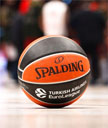
EuroLeague winners: Dominance, surprises, and basketball legends
EuroLeague, in all its forms, has always been the stage of European club basketball- a multigenerational story of basketball dynasties, legendary rivalries, and the relentless pursuit of continental glory.
The history of this competition tells a tale of constant shifts in power, shaped by periods of national and regional dominance, as well as structural transformations that turned it into the global sporting product it is today. It is a competition that draws millions of viewers across Europe and beyond watching, betting and attending games, allows fans to identify closely with their favorite clubs in this elite European tournament.
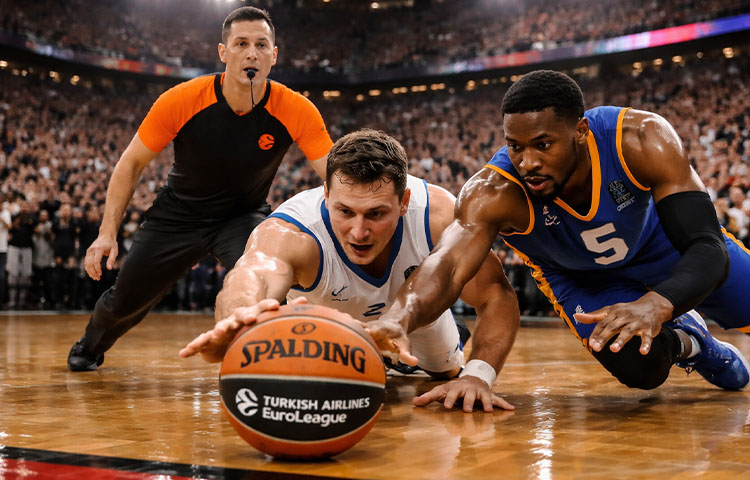
Dominance of ASK Riga and CSKA Moscow
When the FIBA European Champions Cup began in 1958, the basketball map of Europe looked completely different. In the first final series, the Soviet team ASK Riga defeated Bulgarian Akademik Sofia, immediately establishing the dominance of Eastern Bloc teams. This dominance was no coincidence. Led by the legendary coach Alexander Gomelsky, ASK Riga won the first three editions of the competition (1958, 1959, 1960), becoming the first major dynasty in European basketball history. Shortly after, another Soviet giant, CSKA Moscow, entered the scene, capturing titles in 1961 and 1963. In fact, during the first six years of the competition, the champion always came from the Soviet Union, including Dinamo Tbilisi’s title in 1962.
This early supremacy reflected the geopolitical landscape. Club like CSKA were not just sports organizations but state-sponsored institutions designed to project national strength and athletic superiority. Their success was a matter of national prestige, granting them resources and organizational levels that were unattainable for many Western clubs at the time. The centralized sports system in the Soviet Union enabled talent identification and development from an early age, creating a significant competitive advantage.
Rise of Real Madrid and the golden era of Varese
The absolute monopoly of the Soviet Union was broken in 1964 when Real Madrid became the first Western European champion. This triumph marked the beginning of a new era. Under coach Pedro Ferrándiz and with legends like Emilio Rodríguez and Clifford Luyk on the court, Real Madrid established the first major Western dynasty, winning four titles in five seasons (1964, 1965, 1967, 1968). Their clashes with CSKA Moscow during this period became European basketball classics.
The 1970s were marked by one of the most impressive dynasties in sports history – Italian Varese (then known under sponsor names Ignis and Mobilgirgi). The club achieved an almost unbelievable feat, reaching ten consecutive finals from 1970 to 1979, winning five of them (1970, 1972, 1973, 1975, 1976). Varese’s success was the result of exceptional consistency, coaching genius (Aca Nikolić, Sandro Gamba), and the perfect combination of Italian toughness, embodied by Dino Meneghin, and American offensive power, brought by Bob Morse.
The rise of Real Madrid and Varese demonstrated that professional club structures in the West had become capable of matching the state-supported systems of the East, permanently establishing the identities of the greatest clubs in the history of the competition.
Cibona, Jugoplastika, and Partizan’s miracle in Istanbul
In the late 1970s and throughout the 1980s, the center of power in European basketball began shifting toward Yugoslavia. The first sign came with the triumph of Bosna Sarajevo in 1979, when, led by Mirza Delibašić, they defeated the mighty Varese in the final. However, the real explosion of Yugoslav basketball occurred in the mid-1980s. Cibona from Zagreb, carried by the unstoppable talent of Dražen Petrović, won back-to-back titles in 1985 and 1986. Petrović’s 36-point performance in the 1985 final against Real Madrid remains one of the most legendary individual displays in the competition’s history.
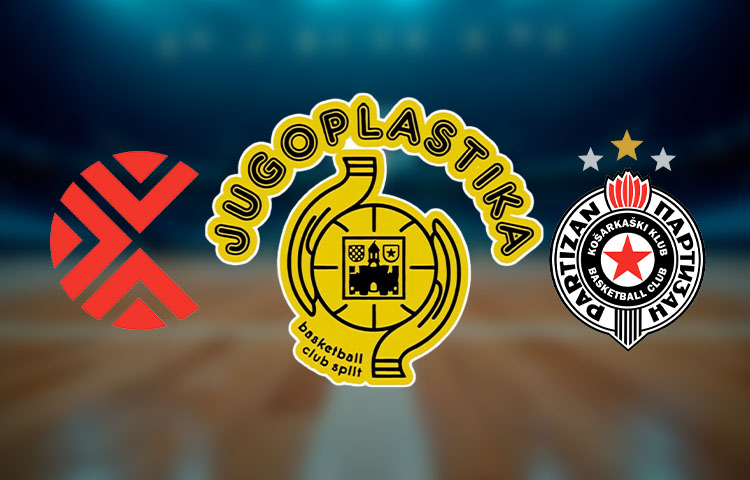
The peak of this era was the dominance of Jugoplastika from Split, a club that won three consecutive titles (1989, 1990, 1991) and is often regarded as one of the best teams ever assembled in Europe. With future NBA stars Toni Kukoč and Dino Rađa under coach Božidar Maljković, Jugoplastika played basketball ahead of its time. This dominance was the crown of a unique philosophy—the “Yugoslav basketball school,” which emphasized technical skill, basketball intelligence, and player versatility. This school produced a generation that later broke barriers and proved that European players could excel in the NBA as well.
The ultimate proof of this system’s strength was Partizan’s miraculous title in 1992. Due to the war in Yugoslavia, the team was forced to play all of its “home” games, except one, in Fuenlabrada, Spain. Led by debut coach Željko Obradović and young stars Predrag Danilović and Aleksandar Đorđević, they won the title in Istanbul, thanks to Đorđević’s legendary three-pointer in the final seconds against Joventut. This remains, without a doubt, the greatest underdog story in EuroLeague history.
Awakening of the greek titans and the expansion of the elite
In the mid-1990s, the Greek powerhouses emerged on the scene. Panathinaikos, under the guidance of Božidar Maljković, won their first title in 1996, followed by Olympiacos, led by Dušan Ivković, a year later. This marked the birth of one of the fiercest rivalries in sports—the “Derby of the eternal rivals”—which would define the next two decades of European basketball.
A key change during this period was the permanent adoption of the Final Four format in 1988. The concluding tournament, held over a single weekend in a knockout format, dramatically increased the uncertainty, excitement, and commercial appeal of the competition. This format changed the nature of winning the title; consistency throughout the season was no longer enough, as teams also needed to perform at the highest level under immense pressure in just two games. It opened the door to surprises, such as Limoges’ title in 1993, and transformed the Final Four into the central event of the European basketball calendar, laying the foundations for future commercialization.
Dominance of Maccabi and the return of CSKA
The 2000–01 season marked a crucial turning point in the history of the competition, particularly off the court. A split occurred, resulting in two parallel leagues: the FIBA SuproLeague and the new EuroLeague, organized by clubs under the ULEB association. That year, Europe had two champions: Maccabi Tel Aviv (SuproLeague) and Kinder Bologna (EuroLeague). The following season saw a reunification under the new organization, Euroleague Basketball, a private company led by top European clubs. This move represented a fundamental shift in the management of European sports, as clubs took control of their commercial destiny from the traditional federation.
The early years of the newly unified EuroLeague were marked by the dominance of Maccabi Tel Aviv, which, led by Šarūnas Jasikevičius and Anthony Parker, won back-to-back titles in 2004 and 2005. At the same time, CSKA Moscow returned to the European throne after a 35-year wait. Under coach Ettore Messina, they built a modern basketball powerhouse, capturing titles in 2006 and 2008 and becoming a regular participant in the Final Four.
Željko Obradović – the greatest coach in EuroLeague history
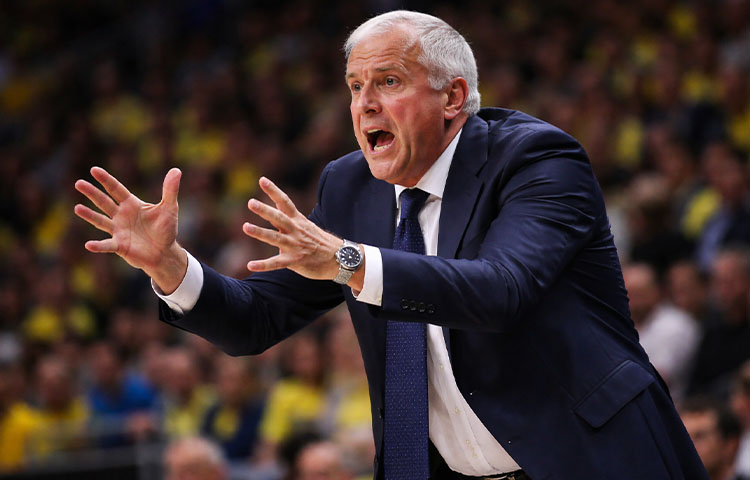
The modern era of the EuroLeague is inseparably linked to Željko Obradović, the most awarded coach in European basketball history. With a record nine titles won with five different clubs (Partizan 1992, Joventut 1994, Real Madrid 1995, Panathinaikos 2000, 2002, 2007, 2009, 2011, and Fenerbahçe 2017), Obradović set the standard for coaching excellence. His dynasty with Panathinaikos, where he captured five titles, represents one of the most dominant periods of a single club in the modern era.
Rise of turkish basketball
The commercial model of the modern EuroLeague, backed by significant sponsorship investments, paved the way for the rise of new powers. Turkish clubs seized this opportunity and thanks to large budgets, became competitive with the traditional giants. The crown of these investments came in 2017, when Fenerbahçe, under Željko Obradović, became the first Turkish club to win the EuroLeague. A few years later, Anadolu Efes confirmed Turkey’s arrival at the top by winning back-to-back titles in 2021 and 2022, years when live betting on EuroLeague games was more exciting than ever. Led by coach Ergin Ataman and the guard duo Vasilije Micić – Shane Larkin, Efes demonstrated that financial strength combined with top-tier player talent can create championship-winning teams.
Legacy of the EuroLeague
From the dominance of Soviet teams during the Cold War, through the Western response, the magic of the Yugoslav basketball school and the rise of the Greek giants, to the modern, commercialized era of super-clubs, the history of the EuroLeague is a dynamic story of evolution. What has remained unchanged is the passion of the fans, the tactical sophistication of the coaches, and the competition’s role as a platform for developing the world’s greatest talents outside the NBA.

A born enthusiast. Looking forward to a new day and new opportunities to learn. Enjoying in conversations with other people and understanding their emotions, always ready to be a good listener. Able to display a whole lot of positive emotions and pass it to other people. Not having problems with talking in front of the group and keeping their attention. Careful with keeping promises and looking at life with internal locus of control.