

Nations League: History, winners and how the competition has evolved
The Nations League is one of the youngest major national-team competitions in European football. UEFA launched it to replace a large number of friendlies with competitive matches and to give national teams more frequent games against opponents of a similar level.
The first edition kicked off in 2018, and in less than a decade the Nations League has become an important part of the European international calendar. Besides the battle for its own trophy, the competition is also linked to qualifying for major tournaments, while the promotion and relegation system gives teams something to play for in almost every match.
Why was the Nations League created?
Before the Nations League, international breaks often consisted of friendlies with no real competitive significance. UEFA wanted a system in which national teams would more often face opponents of roughly equal strength, with results carrying more concrete consequences.
The solution was a league format with promotion and relegation, similar to the one used in domestic leagues.
In the first edition, teams were divided into four tiers – Leagues A, B, C and D. League A brought together the highest-ranked teams, while the rest were placed in the lower tiers.
Group winners in the lower leagues could earn promotion, while the lowest-placed teams were relegated to a lower tier, all of which also made the competition interesting for sports betting. At the same time, the best teams in League A competed for the Nations League trophy.
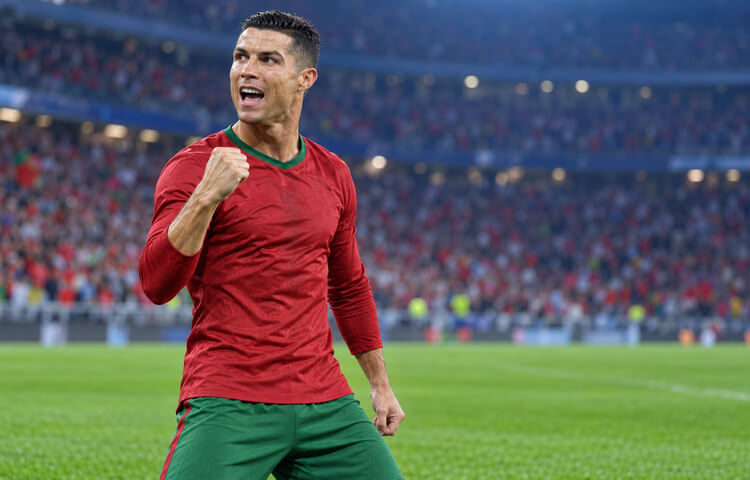
Portugal win the first edition
The first Nations League was played in the 2018/19 season. League A featured 12 teams split into four groups, with the group winners qualifying for the Finals.
Portugal, the Netherlands, England and Switzerland reached the Finals, which were held in Portugal in June 2019. The hosts beat Switzerland in the semi-finals, while the Netherlands knocked out England after extra time. The first Nations League final was played on 9 June 2019 in Porto.
Portugal beat the Netherlands 1-0, with Gonçalo Guedes scoring the only goal. That made Portugal the first winners of UEFA’s new competition.
France win the second edition
The second Nations League was played in the 2020/21 season, and the format had changed in the meantime. Leagues A, B and C were expanded to 16 teams each, giving more national teams a place in the higher tiers.
Italy, Spain, Belgium and France qualified for the Finals.
Spain beat hosts Italy in the semi-finals, while France came back from two goals down against Belgium to win 3-2.
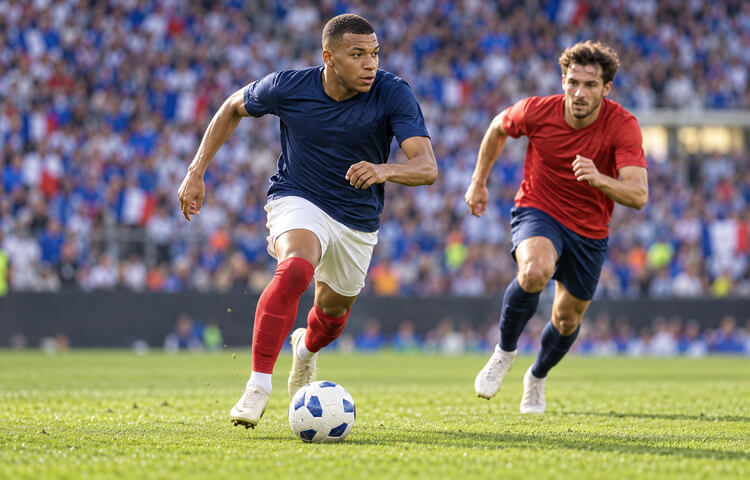
In the final in Milan on 10 October 2021, France beat Spain 2-1. Mikel Oyarzabal put Spain ahead, but Karim Benzema and Kylian Mbappé turned the game around and gave France their first Nations League title.
Spain claim the title in 2023
The third edition produced yet another new champion.
The Netherlands, Croatia, Italy and Spain reached the 2023 Finals. In the semi-finals, Croatia beat hosts the Netherlands 4-2 after extra time, while Spain defeated Italy 2-1.
The final between Croatia and Spain ended goalless, even after extra time.
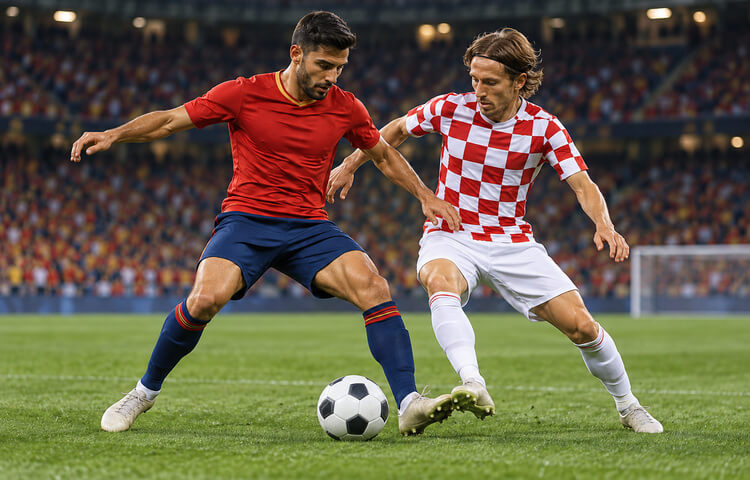
The winner was decided on penalties. Spain won the shoot-out 5-4 to lift their first Nations League trophy. For Croatia, it was their first final in the competition.
Portugal become the first two-time winners
The 2024/25 season brought the biggest format change since the competition was founded. League A quarter-finals were introduced, so group winners no longer went straight to the Finals.
The group winners and runners-up from the four groups played two-legged quarter-finals, and Portugal, Germany, France and Spain reached the Finals in Germany.
Portugal beat Germany 2-1 in the semi-finals, while Spain overcame France 5-4. That match became the highest-scoring game in Nations League history.
The final in Munich ended 2-2 after extra time. Spain led twice, but Nuno Mendes and Cristiano Ronaldo equalised for Portugal on both occasions. Portugal then won the penalty shoot-out 5-3.
This made them the first national team to win the Nations League twice – in 2019 and 2025.
How do promotion and relegation work?
One of the key features of the Nations League is the possibility of moving between tiers.
In the 2026/27 season, Leagues A, B and C each have 16 teams split into four groups of four. League D has seven teams split into two groups.
In the league phase, each team plays every opponent in its group twice, once at home and once away. A win is worth three points, a draw one point and a defeat none.
Group winners in Leagues B and C are promoted directly, as are the group winners in League D. The fourth-placed teams in Leagues A and B are relegated directly.
There are also promotion and relegation play-offs. Third-placed teams in League A face the runners-up from League B, while third-placed teams in League B play the runners-up from League C. There are also separate play-offs between Leagues C and D.
In League A, the top two teams from each group advance to the quarter-finals. The winners of the two-legged quarter-finals qualify for the four-team Finals.
How is the Nations League linked to major tournaments?
From the start, the Nations League was not designed as a completely standalone competition.
Its results have served as an additional route to the European Championship and the World Cup. Four places at EURO 2020 were decided through play-offs linked to the results of the first Nations League, and a similar principle was used in later qualifying cycles.
For the 2026 World Cup, the four best-ranked group winners from the 2024/25 Nations League that did not finish first or second in their qualifying groups earned a place in the European play-offs.
UEFA has also planned to link the results of the 2026/27 Nations League to qualifying for EURO 2028, so the competition keeps its added significance beyond the battle for its own trophy.
The 2026/27 Nations League is the fifth edition
The fifth edition of the Nations League kicked off in September 2026.
The first four matchdays of the league phase were played between 24 September and 6 October, while the last two matchdays are scheduled for 12 to 17 November.
The League A quarter-finals and the League A/B and B/C play-offs will be played from 25 to 30 March 2027, and the Finals will take place from 9 to 13 June 2027.
Holders Portugal are in Group A4 with Denmark, Norway and Wales. Spain will face Croatia, England and Czechia in Group A3, while Group A1 features France, Italy, Belgium and Türkiye.
The Nations League format changes from 2028
In May 2026, UEFA approved a new structure for men’s national-team competitions that will apply after the 2028 European Championship.
From the 2028/29 edition, the Nations League will move from the current four leagues to three. Each will have 18 teams, while League C will have 19 because there are 55 participants in total.
Each league will be divided into three groups. Leagues A and B will each have three groups of six teams, while League C will have two groups of six and one group of seven.
The way the league phase is played will also change, but the quarter-finals, the Finals for the top four teams and the promotion and relegation play-offs will remain part of the system.
Why has the Nations League become an important part of European football?
When the first edition began in 2018, the Nations League was a brand-new competition that still had to find its place in international football, so even live betting on these matches may not have been all that interesting at first. In less than ten years, it has developed a recognisable format, big finals and champions such as Portugal, France and Spain.
The biggest difference compared with the international breaks of the past is that almost every match now matters. The best teams fight for the trophy, others for promotion or survival, and results can also affect the road to the European Championship or the World Cup.
That is how the Nations League has grown from an idea to reduce the number of friendlies into an important part of UEFA’s national-team system. The planned reform from 2028 shows that the competition is still evolving and adapting to the European football calendar.

A born enthusiast. Looking forward to a new day and new opportunities to learn. Enjoying in conversations with other people and understanding their emotions, always ready to be a good listener. Able to display a whole lott of positive emotions and pass it to other people. Not having problems with talking in front of the group and keeping their attention. Careful with keeping promises and looking at life with internal locus of control.