

Most successful EuroLeague coaches | Top list of Europe's best coaches
In the world of sport, it's often said that players win games while coaches lose them. In European basketball, however, that saying loses its weight. The EuroLeague is a different beast entirely — the most tactically demanding competition on the planet, where every possession carries weight and every mistake is punished ruthlessly, as anyone who follows sports betting knows all too well. Here, a coach isn't just a motivator; he's a chess player moving pieces in real time, a psychologist managing egos, and a visionary who sees the next move before it happens.
While the NBA often celebrates individual superstar talent, the history of the Old Continent has been written by great strategists. The most successful EuroLeague coaches aren't just trophy collectors; they're the architects of basketball dynasties and the people who changed the very philosophy of the game.
From Athens' green gods, through Moscow's "Red Army," to the miracles in Istanbul and Belgrade, these are the men who defined what it means to be champion of Europe.
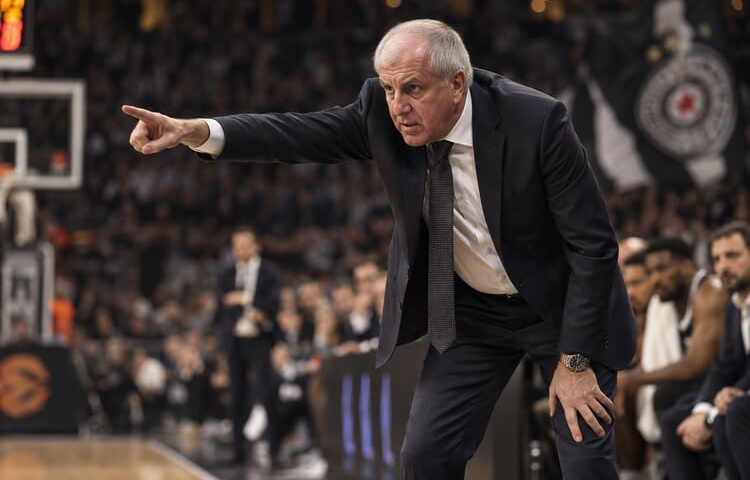
Željko Obradović — Lord of the Rings (9 titles)
When it comes to coaching in Europe, there's Željko Obradović, then a long, long gap, and only then everyone else. Nicknamed "Žoc," he's a category of his own. With nine European championship titles won with five different clubs, he's more decorated than any team in the competition's history except Real Madrid.
His story reads like a film script. It all began in 1992, when as a rookie coach of Partizan, leading the youngest team in the competition's history and playing as the nominal home side in Fuenlabrada due to sanctions, he won the title with Saša Đorđević's famous three-pointer.
But Željko didn't stop there. Titles followed with:
Joventut Badalona (1994): He brought the club from Badalona its first and only title.
Real Madrid (1995): He returned the "King" to the throne after a long drought.
Panathinaikos (2000, 2002, 2007, 2009, 2011): He built the most dominant dynasty of the modern era, turning Athens into the basketball capital of the continent.
Fenerbahçe (2017): He delivered Turkish basketball's first-ever title.
Obradović's greatness lies not just in the numbers, but in his adaptability. He won playing slow, low-scoring basketball, and later in an era of fast breaks and pick-and-roll offense. His attention to detail and fanatical dedication make him the undisputed number one.
Ettore Messina — The Professor of Basketball (4 titles)
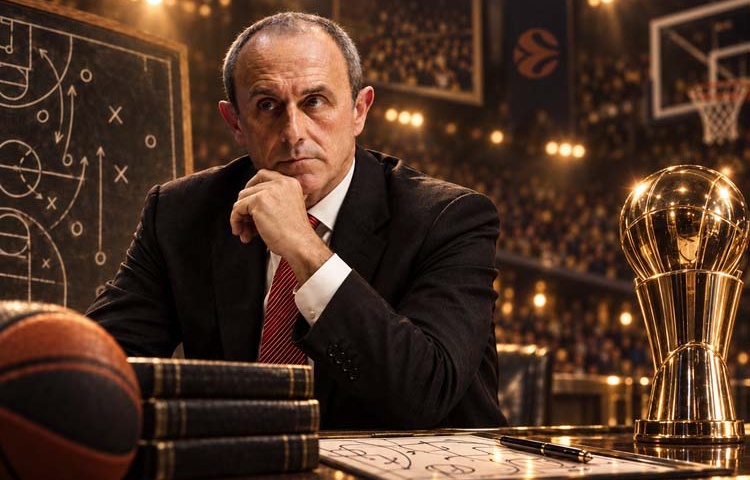
If Obradović is fire and emotion, Ettore Messina is ice and calculation. The Italian coach, known for his strict, academic approach and airtight defensive systems, defined the turn of the 21st century.
Messina first built a powerhouse at Kinder (Virtus) Bologna, winning two titles (1998, 2001) led by Predrag Danilović and later Manu Ginóbili. He then took over CSKA Moscow and transformed it from perennial underachievers on the Final Four stage into a machine that won two titles (2006, 2008). His influence on coaches worldwide, including in the NBA (where he served as an assistant to Gregg Popovich), is immeasurable.
Božidar Maljković — The Architect of Jugoplastika (4 titles)
On the list of the most successful EuroLeague coaches, another name from the region stands out. Božidar "Boža" Maljković built what is arguably the greatest European team of all time — Jugoplastika from Split.
With Toni Kukoč and Dino Rađa, Maljković won back-to-back titles (1989, 1990), playing basketball that was ahead of its time — fast, fluid, and technically flawless.
But Maljković proved his genius when he moved to Limoges. With a team of underdogs, playing "anti-basketball" and winning 59–55, he stunned Europe and claimed the title in 1993. He added a fourth crown with Panathinaikos in 1996 (the club's first ever), confirming his status as a legend who knows how to win by any means necessary.
Pedro Ferrandiz and Alexander Gomelsky — The Pioneers
We shouldn't forget the men who paved the way.
Pedro Ferrandiz (4 titles): The legendary Real Madrid coach of the 1960s and '70s. He established the "royal club" as a global brand and still holds the record for most Spanish championships won.
Alexander Gomelsky (4 titles): The father of Soviet basketball. Nicknamed the "Silver Fox," he dominated the competition's early years with Riga ASK (1958, 1959, 1960), then added a fourth title with CSKA Moscow in 1971. The EuroLeague's Coach of the Year award is named after him to this day.
Pini Gershon and Ergin Ataman — The Modern Challengers
The EuroLeague's history wouldn't be complete without mentioning the coaches who revolutionized offensive basketball.
Pini Gershon (3 titles): The Israeli coach who, with Maccabi Tel Aviv (2001, 2004, 2005), may have played the most attractive basketball in the competition's history. His "run and gun" philosophy and use of multiple ball-handlers at once (Jasikevičius, Parker) turned Maccabi into a cult team.
Ergin Ataman (3 titles): The man who has defined the last five years. He first won back-to-back titles with Anadolu Efes (2021, 2022), playing modern basketball built around freedom for his guards (Micić, Larkin). Then in 2024, he pulled off the unthinkable — taking over a struggling Panathinaikos side sitting at the bottom of the table and leading them to the top of Europe in his very first season. His confidence ("I booked a hotel for the final before the season even started") and his ability to motivate players make him a one-of-a-kind figure.
What makes a champion?
Looking at this list, it's clear there's no single formula for success — just as there's no single formula for live betting on these teams. Obradović is a master of adaptation, Messina a professor of discipline, Maljković a tactical chameleon, and Ataman a psychologist who instills belief.
Still, all of the EuroLeague's most successful coaches share one trait — the ability to perform at their best under the greatest pressure. The Final Four is a brutal format. One bad quarter can erase an entire season of dominance. It's in those very moments, when the game tightens and the rim shrinks, that a coach's greatness shows through. They're the ones who draw up the winning play, the ones who spot fear in their opponents' eyes, and the ones whose names remain forever written into the history of the game under the basket.
A born enthusiast. Looking forward to a new day and new opportunities to learn. Enjoying in conversations with other people and understanding their emotions, always ready to be a good listener. Able to display a whole lott of positive emotions and pass it to other people. Not having problems with talking in front of the group and keeping their attention. Careful with keeping promises and looking at life with internal locus of control.