

FIFA World Cup 2026 | Complete guide to the world cup
Football world is preparing for a revolution. As the calendar slowly approaches June 2026, excitement is reaching its peak because we are about to witness a tournament like never before. The 2026 World Cup will be historic in many ways: for the first time it will be jointly hosted by three countries (USA, Canada and Mexico) and for the first time as many as 48 national teams will participate.
From stadiums in Mexico City, through Canadian Toronto, all the way to the final in New York (New Jersey), football will dominate the North American continent during June and July. For football fans, as well as sports betting enthusiasts, this championship brings a completely new dynamic, a larger number of matches and unpredictability that will be characteristic of this new competition format.
Competition format: 48 teams and 104 matches
The most significant change compared to all previous editions is the expansion of the number of participants. Instead of the previous 32 teams, in 2026 we will watch 48 national teams. The format that will be played is as follows:
- Group stage: National teams will be divided into 12 groups with four teams each.
- Advancement: The top two teams from each group advance to the knockout stage, as well as the eight best third-placed teams.
- Round of 32: For the first time in history, the knockout phase starts from the Round of 32, which means that the road to the trophy will now require eight matches instead of the previous seven.
The total number of matches has increased from 64 to an incredible 104, which extends the duration of the tournament to 39 days.
Group schedule
Group A: Mexico, South Africa, South Korea, Czech Republic
Group B: Canada, Bosnia and Herzegovina, Qatar, Switzerland
Group C: Brazil, Morocco, Haiti, Scotland
Group D: USA, Paraguay, Australia, Turkey
Group E: Germany, Curaçao, Ivory Coast, Ecuador
Group F: Netherlands, Japan, Sweden, Tunisia
Group G: Belgium, Egypt, Iran, New Zealand
Group H: Spain, Cape Verde, Saudi Arabia, Uruguay
Group I: France, Senegal, Iraq, Norway
Group J: Argentina, Algeria, Austria, Jordan
Group K: Portugal, DR Congo, Uzbekistan, Colombia
Group L: England, Croatia, Ghana, Panama
Host cities
The tournament will be played in 16 cities divided into three geographical zones (West, Central and East) in order to reduce exhausting travel for players and fans.
USA (11 cities): Atlanta, Boston, Dallas, Houston, Kansas City, Los Angeles, Miami, New York/New Jersey, Philadelphia, San Francisco and Seattle.
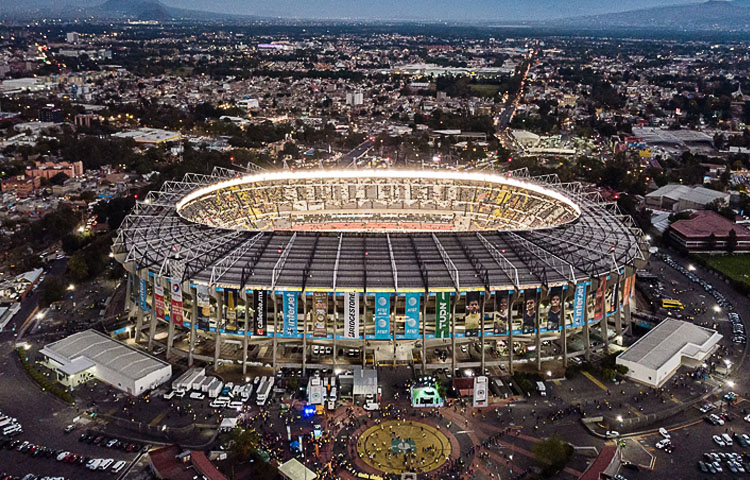
Mexico (3 cities): Guadalajara, Mexico City and Monterrey. The iconic Azteca stadium will become the first stadium in history to host matches at three different World Cups.
Canada (2 cities): Toronto and Vancouver.
The final will be played on 19 July 2026 at the grand MetLife Stadium in New Jersey, while the honour of opening the championship on 11 June goes to Mexico City.
Favorites and challengers for the throne
The expansion of the format brings more teams from Africa, Asia and North America, but the main favorites still come from traditional football powerhouses:
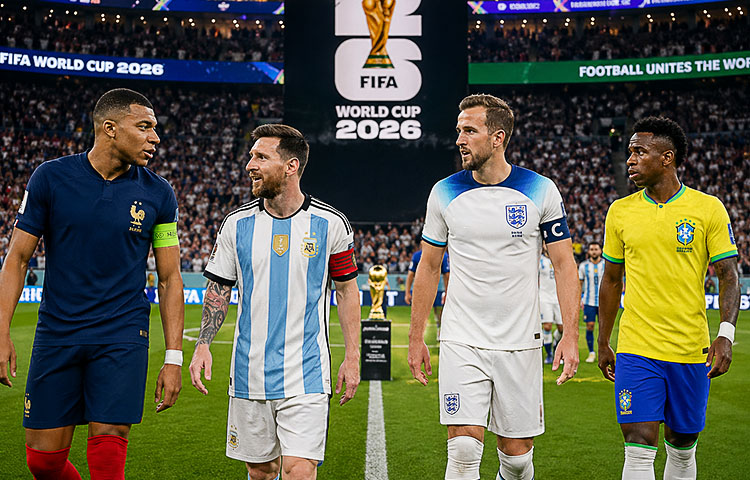
France and England: With incredible squad depth, these two teams enter as primary favorites. The French rely on the maturity of Mbappe, while the English believe their generation is finally ready for the very top.
Argentina: The current champions will enter the tournament with the desire to defend the throne. Even if this will be the first tournament in the so-called post-Messi era, the team spirit and strength of the Gauchos are unquestionable.
Brazil: This team is always a favorite. After several disappointing finishes, the Brazilians on American soil are seeking their sixth title, relying on a new generation of young stars.
Important factors at the championship
The 2026 World Cup brings specific challenges that will test the limits of endurance and tactical adaptability of all participants.
Logistics and climate conditions
The North American continent offers extreme differences in environment. Playing at high altitude in Mexico City requires a completely different physical preparation compared to matches in humid Miami or significantly cooler Toronto and Seattle. Acclimatization and the ability of medical teams to recover players between long flights will be crucial factors in maintaining a high pace of play.
Dynamics of the new format
With the expansion to 48 national teams, in the group stage we will witness matches between teams of different levels of experience and quality. This may lead to very open matches with a large number of goals, as favorites will try to secure a safe passage early, while debutants will seek their chance through passionate fighting and surprises.
Strategic importance of goal difference
The introduction of the rule where eight best third-placed teams advance to the knockout stage changes the approach to the final round of group matches. Every scored or conceded goal can decide remaining in the tournament. We expect uncompromising football until the final whistle, as goal difference will become the primary criterion in complex calculations for qualification among the best 32 teams, making live betting more than interesting.
Significance of the championship for football development
This tournament is not only a commercial project; it is designed to make football the number one sport in North America. For Canada and the USA, this is an opportunity to confirm their status as emerging football nations. The increase in the number of participants to 48 allows smaller nations to reach the biggest stage more easily.
A summer that will change history
The 2026 World Cup will be a festival of football, different cultures and incredible sporting energy. From the heat of Mexican stadiums to modern arenas in the USA, ahead of us are 39 days in which new legends will be written. Whether you are supporting favorites or waiting for a big surprise, one thing is certain, football has never been more massive and global.

A born enthusiast. Looking forward to a new day and new opportunities to learn. Enjoying in conversations with other people and understanding their emotions, always ready to be a good listener. Able to display a whole lott of positive emotions and pass it to other people. Not having problems with talking in front of the group and keeping their attention. Careful with keeping promises and looking at life with internal locus of control.