

Europa League: History, winners and biggest records
The Europa League is one of the most important club football competitions in Europe. Although it sits below the Champions League in the hierarchy of UEFA competitions, the trophy has been won throughout its history by some of Europe's biggest clubs, including Liverpool, Juventus, Inter, Real Madrid, Chelsea, Manchester United, Atlético Madrid and Sevilla.
Today's UEFA Europa League grew out of the UEFA Cup, launched in the 1971/72 season. Over more than half a century, the name, the number of participants and the competition format have changed, as has the way people bet on it, but the core idea has stayed the same – giving clubs from different European leagues another route to a major international trophy.
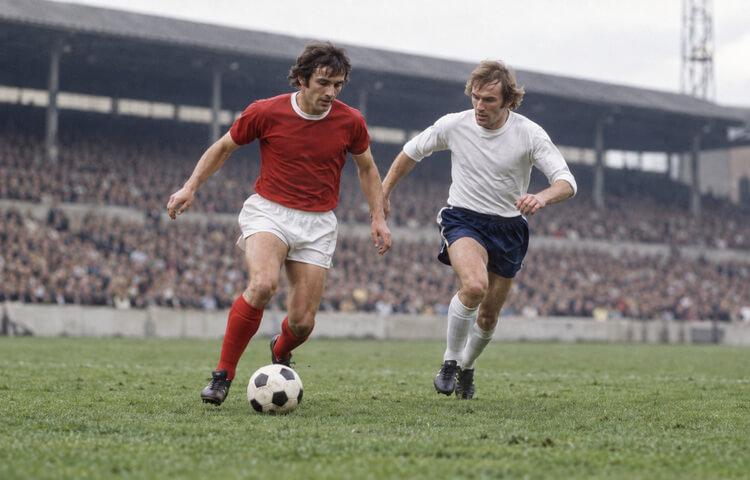
How did the Europa League begin?
The UEFA Cup was launched in 1971 as UEFA's third major club competition, alongside the European Cup and the Cup Winners' Cup.
The new tournament replaced the Inter-Cities Fairs Cup, a competition that had existed since the 1950s but was not directly run by UEFA. The creation of the UEFA Cup brought unified rules, refereeing and disciplinary regulations overseen by European football's governing body.
The first edition featured 64 clubs. The competition was played entirely as a knockout, with every tie made up of a home and an away match.
The first winners were Tottenham. The English club faced Wolverhampton in the 1972 final and won 3-2 on aggregate. Tottenham won the first leg in Wolverhampton 2-1, while the return leg in London ended 1-1.
The UEFA Cup becomes one of Europe's strongest competitions
During the 1970s and 1980s, the UEFA Cup carried particular sporting weight. Under the system at the time, only national champions qualified for the European Cup, so the UEFA Cup was often home to the second, third and fourth best clubs from Europe's strongest leagues.
Liverpool won the competition in 1973 and 1976, Borussia Mönchengladbach in 1975 and 1979, while Juventus, Feyenoord and PSV were also among the winners of that era.
The 1980s brought even more variety. The title went to Eintracht Frankfurt, Ipswich Town, IFK Göteborg, Real Madrid, Bayer Leverkusen and Napoli. Real Madrid won back-to-back titles in 1985 and 1986, while Diego Maradona led Napoli to the trophy in 1989.
In the late 1980s and throughout the 1990s, Italian clubs were especially dominant. Napoli, Juventus, Inter and Parma won a string of trophies between them, making Serie A the most influential league in the competition during that period.
When did the final become a single match?
The first 26 editions of the UEFA Cup ended with a two-legged final – one match at each finalist's stadium.
That changed in the 1997/98 season, when a single-match final at a pre-selected neutral venue was introduced.
The first final of this kind was played in 1998 at the Parc des Princes in Paris. Inter beat Lazio 3-0, with goals from Iván Zamorano, Javier Zanetti and Ronaldo.
The single-match final format remains in place to this day.
The end of the Cup Winners' Cup made the competition even stronger
Another major change came in 1999, when UEFA abolished the Cup Winners' Cup.
Clubs that would previously have played in that competition were moved into the UEFA Cup. At the same time, links with the Champions League were strengthened, so teams knocked out at certain stages of Europe's top competition continued their season in the UEFA Cup.
In 2000, Galatasaray became the first club to start the season in the Champions League and go on to win the UEFA Cup. They beat Arsenal on penalties in the final, becoming the first Turkish club to win a major European trophy.
The next big change followed in the 2004/05 season with the introduction of a group stage. Forty clubs were split into eight groups of five teams, with each side playing four matches – two at home and two away.
How did the UEFA Cup become the Europa League?
In 2008, UEFA announced a major overhaul of the competition, and from the 2009/10 season the UEFA Cup was renamed the UEFA Europa League.
The change went beyond the name. A new visual identity was introduced, along with a different qualifying system and a group stage of 48 clubs split into 12 groups.
The first edition under the new name was won by Atlético Madrid. In the 2010 final in Hamburg, the Spanish club beat Fulham 2-1 after extra time, thanks to Diego Forlán's second goal in the 116th minute.
From the 2014/15 season onwards, the Europa League winners also earned a place in the following season's Champions League. Sevilla became the first club to benefit from the new rule when they lifted the trophy in 2015.
Sevilla – the most successful club in Europa League history
If one club is especially associated with this competition, it's Sevilla.
The Spanish side have won the UEFA Cup and Europa League a record seven times. Their first two titles came in 2006 and 2007, after which Sevilla put together a unique run of three consecutive trophies in 2014, 2015 and 2016.
They won their sixth title in 2020 by beating Inter, and their seventh in 2023 after a penalty shoot-out against Roma. Sevilla have won all seven UEFA Cup and Europa League finals they have played in.
Behind them, with three titles each, are Inter, Liverpool, Juventus, Atlético Madrid and Tottenham. Tottenham joined this group by winning the trophy in 2025.
Borussia Mönchengladbach, Feyenoord, IFK Göteborg, Real Madrid, Parma, Porto, Chelsea and Eintracht Frankfurt have two titles each.
Spanish clubs have won a record 14 trophies in total, English clubs 11 and Italian clubs ten.
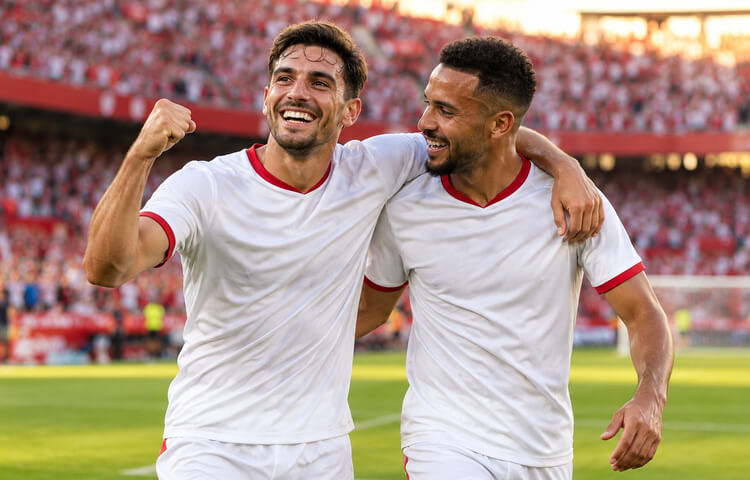
Unai Emery – the coach who defined the competition
Unai Emery holds a special place in Europa League history.
The Spanish coach won three consecutive titles with Sevilla between 2014 and 2016, and in 2021 he led Villarreal to victory over Manchester United in the final.
He won his fifth trophy in 2026 as Aston Villa manager. The English club beat Freiburg 3-0 in the final in Istanbul, with goals from Youri Tielemans, Emiliano Buendía and Morgan Rogers.
Aston Villa thus won their first Europa League and became the 31st different club to lift the UEFA Cup or Europa League trophy. With five titles, Emery further strengthened his status as the most successful coach in the competition's history.
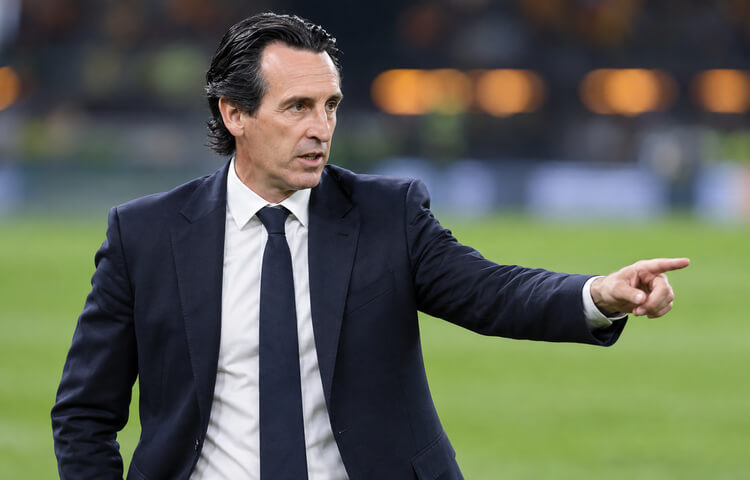
Which players hold the biggest records?
Clubs are not the only ones who have shaped the competition's history. Among the players, Henrik Larsson stands out: with 40 goals, he is the all-time top scorer in the UEFA Cup and Europa League according to UEFA statistics.
He is followed by Pierre-Emerick Aubameyang with 37 goals, while Klaas-Jan Huntelaar scored 34.
João Moutinho holds the record for most appearances with 99 matches, ahead of Giuseppe Bergomi with 96.
Of course, comparing different eras is not entirely straightforward. The number of matches and the competition format have changed several times, so players in certain periods had more chances to play and score than those from the days when the competition was played purely as a knockout.
What does the Europa League look like today?
Another major reform was introduced from the 2024/25 season. The traditional group stage was scrapped and replaced by a single league phase with 36 clubs.
Each team plays eight matches against eight different opponents, four at home and four away, which makes live betting in this phase especially interesting. All clubs are ranked in a single league table.
The top eight after the league phase go straight through to the round of 16. Clubs finishing from ninth to 24th play an extra two-legged tie for the remaining eight places in the round of 16, while teams from 25th place down end their European season. After that comes the classic knockout stage all the way to the final.
The same system is being used in the 2026/27 season, the 56th edition of the competition and the 18th since the UEFA Cup was renamed the Europa League. The final will be played on 26 May 2027 at the Frankfurt Stadium in Germany.
Unless they have already qualified through their domestic league, the winners will secure a place in the league phase of the 2027/28 Champions League.
Why does the Europa League hold a special place in European football?
Throughout its history, the Europa League has often delivered different stories from the Champions League. The trophy has been won by European giants, but also by clubs for whom this competition represented their greatest international success.
From Tottenham's first trophy in 1972, through Italian dominance in the 1990s and Sevilla's record run, to Emery's fifth triumph in 2026 and today's 36-club league phase, the competition has constantly adapted to changes in European football.
The name, the format and the road to the final have all changed, but the trophy's significance has not faded. The Europa League still gives clubs the chance to win a major European title, earn a place in the Champions League and write their name alongside some of the most famous teams in the history of European football.

A born enthusiast. Looking forward to a new day and new opportunities to learn. Enjoying in conversations with other people and understanding their emotions, always ready to be a good listener. Able to display a whole lott of positive emotions and pass it to other people. Not having problems with talking in front of the group and keeping their attention. Careful with keeping promises and looking at life with internal locus of control.