
Champions League winners: list of champions and club records
The Champions League is not just a competition where the best European football teams compete. It is the pinnacle of club sport and a football arena where legends are created.
For the average viewer, this is a spectacle of goals. However, for true connoisseurs, the history of this competition is a map that reveals who the real European giants are. Being the champion of your own country is a matter of prestige, but being the champion of Europe is a ticket to eternity.
Through the decades, Champions League winners have defined eras and written history. Knowing the tradition of certain teams in this competition is often a crucial factor, and those who follow the odds and love betting on the strongest European competition know this best.
From the European Cup to the Champions League
Before we look at the list of laureates, it is important to understand the format. The competition was founded in 1955 as the European Champion Clubs' Cup. It was played as a knockout tournament, with the participation of national champions and the title holder (with a few exceptions in early editions). It was a time of romantic football where the path to the final was shorter, but no less thorny.
In the early 1990s, a group stage was introduced (from 1991), and from the 1992/93 season, the competition was officially branded as the UEFA Champions League. Although the name and format changed, the weight of the trophy remained the same. The winners bear the title of the best on the Old Continent, and the "big-eared trophy" has become the holy grail of football.
Real Madrid: the absolute ruler
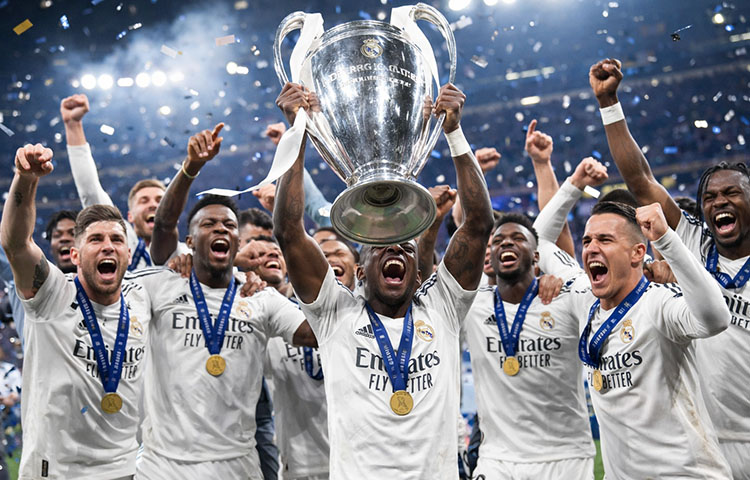
When one says "Champions League winners," they mean Real Madrid. With a record 15 titles, the "Royal Club" is a category of its own. Their dominance spans from the first five consecutive titles in the fifties, all the way to the modern era where, under the leadership of Zidane and Ancelotti, they did the unthinkable – winning trophies in series.
What sets Real apart is a specific mentality. Even when they are statistically outplayed, they find a way to win. It is that "X factor" that everyone who closely follows football now knows – Real is never written off in the Champions League, not even in stoppage time.
Milan: Italian pride
In second place on the all-time list is AC Milan with 7 titles. The "Rossoneri" have proven throughout history that Italian football is not just defense, but also art. From Arrigo Sacchi's revolution to the generation of Kaka and Seedorf, Milan always knew how to play European matches. Although they have been going through a transition in recent years, their "European DNA" is undeniable.
Liverpool and Bayern: Anfield vs. the german machinery
Third place with 6 trophies each is shared by Liverpool and Bayern Munich.
Liverpool has a special magic. Anfield becomes an impregnable fortress on European nights. Their famous 2005 final in Istanbul, when they came back from 0:3 against Milan, is considered one of the greatest comebacks in football history.
Bayern Munich is the definition of German discipline and perseverance. The Bavarians rarely fluctuate, and their 2020 title is truly special because that year they won all 11 matches in the Champions League and took the title.
Barcelona and the style revolution
With 5 titles, Barcelona changed the way we look at football. Their dominance in the 21st century, led by Messi, Xavi, and Iniesta, brought the "tiki-taka" style. They didn't just win; they hypnotized opponents with ball possession, proving that technical superiority can surpass physical strength.
Ajax and heroes from the shadows
We must not forget Ajax (4 titles), a club that gained fame by creating players in its academy, rather than buying stars.
The list of champions would not be complete without mentioning those who broke the dominance of the wealthiest. For us, the most important year is 1991, when Red Star became the champion of Europe in Bari. That success of the golden generation (Savićević, Prosinečki, Pančev) remains proof that talent and heart can rival millions. Besides Red Star, historical surprises were also made by Steaua, Nottingham Forest, and Porto.
Structure of winners by country
For those who love statistics and trends, here is where the champions most often come from:
Spain: Convincingly at the top (Real Madrid and Barcelona).
England: The largest number of different clubs that have won the trophy.
Italy: Milan, Inter, and Juventus brought glory to Serie A.
Germany: Bayern is the leader, along with Dortmund and Hamburg.
Why is it so hard to win the trophy?
The Champions League is a cruel combination of a league and a cup. The group stage requires consistency, but the knockout stage demands mental strength and a moment of inspiration. One bad night, one red card or one blunder can destroy the dreams of an entire season. That is why Champions League winners are teams that have a "deep bench" and the ability to time their form for the spring, when medals are handed out.
Money plays a big role today, but it is not a guarantee. The best examples are Manchester City (which waited a long time for its first title) and PSG, which after years of investment finally won its first title in 2025.
Football immortality in action
Watching the Champions League means witnessing history in the making. Every season brings new heroes and tragedians, from Zidane's volley to John Terry's tears.
Champions League winners are not just statistics; they become part of a cultural heritage. For players, it is the peak of their career and for fans, eternal pride. And for all of us who follow football through screens, it is a guarantee of top excitement. Regardless of whether you are betting on the favorites in live betting on one of the matches or looking for an upset, the Champions League is a competition where the impossible often becomes possible.

A born enthusiast. Looking forward to a new day and new opportunities to learn. Enjoying in conversations with other people and understanding their emotions, always ready to be a good listener. Able to display a whole lot of positive emotions and pass it to other people. Not having problems with talking in front of the group and keeping their attention. Careful with keeping promises and looking at life with internal locus of control.