

Greatest ATP records: Who are the best tennis players of all time
From the first wooden rackets to modern technological innovations, tennis has come a long way, but one thing has remained unchanged – the greatest tennis players of all time remain symbols of passion, discipline and records that have marked entire eras, while also becoming idols to all those girls and boys who are just beginning to hold a tennis racket in their hands.
In a world where every season brings new challenges and new opportunities for betting, ATP records serve as a lasting measure of greatness. They reflect not only the number of titles won, but also consistency, longevity and the ability to dominate against the best.
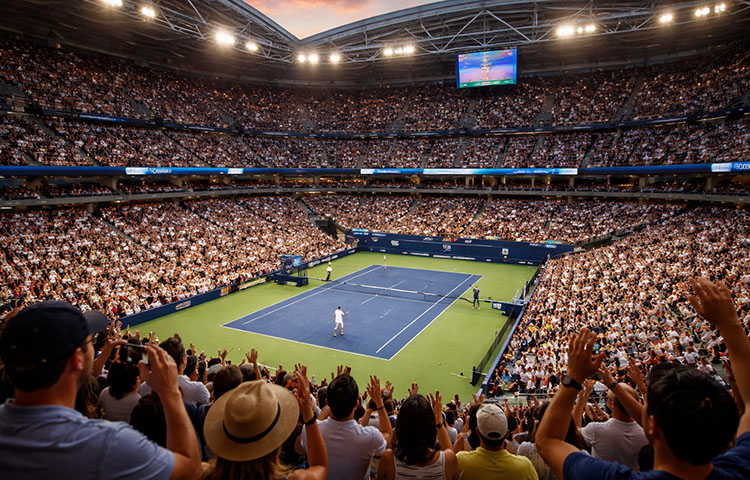
Beginning of the professional era and the first records
The professional era of tennis began in 1968, when amateurs and professionals were finally allowed to compete in the same tournaments. This new era opened the door to the globalization of tennis and created space for the emergence of great rivalries and impressive ATP records.
One of the first true greats was Rod Laver, the only tennis player in history to win all four Grand Slam tournaments in a single season — and he did it twice, in 1962 and 1969. His record remains unmatched more than half a century later and is often used as a reference point when discussing the greatest achievements in tennis.
The 1970s and 1980s brought new legends — Björn Borg, who won five consecutive Wimbledon titles and John McEnroe, known for the perfect combination of talent and rebellious temperament. Their rivalry brought emotion, passion and drama into tennis, turning the sport into a global spectacle.

The era of Sampras, Agassi and the arrival of Federer
The 1990s were marked by Pete Sampras, the man who redefined dominance on grass. Sampras finished six consecutive seasons as number 1 on the ATP ranking (1993–1998) — a record that still testifies to his incredible talent and perseverance. His playing style, based on a powerful serve and net game, became a model for generations.
His eternal rival, Andre Agassi, was the complete opposite — a tennis player who won all four Grand Slams and an Olympic gold medal (Atlanta 1996), becoming one of the few with the so-called “Career Golden Slam.” Agassi made tennis more accessible and popular thanks to his character and charm.
At the beginning of the 2000s, a man stepped onto the scene who changed the way tennis is played — Roger Federer. His elegance, precision, and technical perfection made him synonymous with excellence. Federer was the first tennis player to reach 20 Grand Slam titles, setting a new standard of greatness in the Open Era.
Nadal, Djokovic and breaking boundaries
If Federer is a symbol of elegance, Rafael Nadal is the embodiment of strength and fighting spirit. His dominance on clay still seems almost impossible — with 14 titles at Roland Garros and a total of 22 Grand Slam trophies, Nadal has become synonymous with endurance and mental toughness. His record on the Paris clay (only three losses in over 110 matches) will likely never be surpassed.
But no tennis player has pushed the limits like Novak Djokovic. The Serbian champion has set almost all the key ATP records of the modern era:
Most weeks at number 1 on the ATP ranking – 428 (all-time record)
Most Masters 1000 titles – 40+
Most Grand Slam titles in history – 24
Most seasons finished as number 1 – 8
Most wins against Top 10 players
Djokovic is the only tennis player in the Open Era to simultaneously hold all four Grand Slam titles, a feat known as the “Nole Slam.” His approach to the game — tactically, physically and mentally flawless — has made him the most complete player in the history of tennis.
Legendary rivalries: the heart of every era
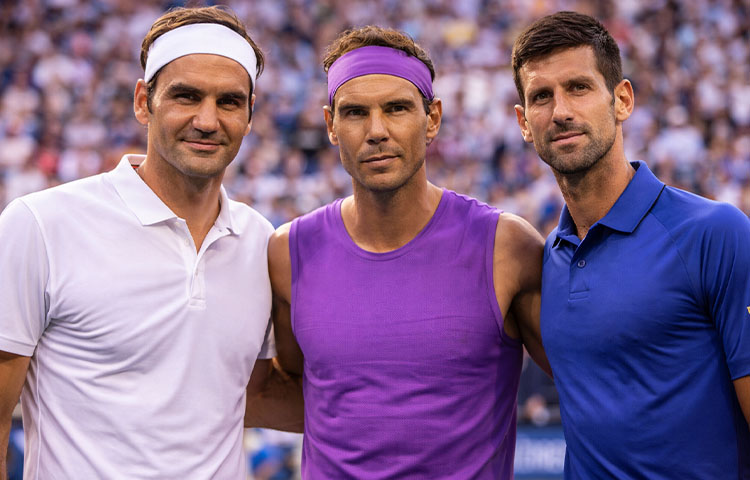
Tennis would not be what it is without the rivalries that shaped it. From Borg–McEnroe and Sampras–Agassi, to the modern “Big Three” – Federer, Nadal and Djokovic – every duel was more than a sporting clash.
The rivalry between Federer and Nadal, known as “Fedal,” brought a contrast of style and personality: a left-handed fighter against a precision artist. Their duels, especially at Wimbledon and Roland Garros, entered the history of the sport.
Later, Djokovic became a key element of that trio – a player who managed to prevail against both in the biggest moments. Statistics confirm: Djokovic has a positive head-to-head record against both Federer and Nadal, further confirming his historical dominance.
New generation and the future of ATP records
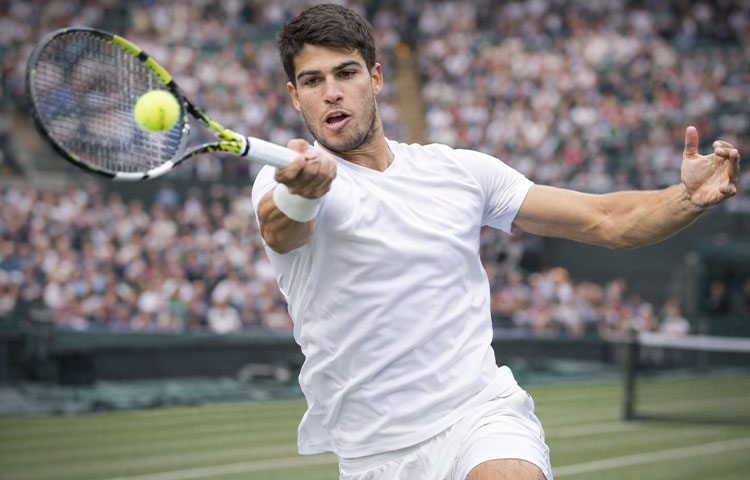
After two decades of “Big Three” dominance, tennis is entering a new era. Carlos Alcaraz and Jannik Sinner represent a wave of young stars who combine speed, aggressiveness and tactical maturity. Alcaraz has already become the youngest world number 1 in ATP history and has won Grand Slam titles on both grass and clay, showing versatility worthy of his predecessors.
Yet, the records set by Federer, Nadal and Djokovic seem almost untouchable. Today's ATP records have become limits that new generations can only attempt to reach.
Numbers that changed tennis
A look at the statistics best describes the greatness of these champions:
Roger Federer – 20 Grand Slam titles, 310 weeks as number 1 (237 consecutive)
Rafael Nadal – 22 Grand Slam titles, 14-time Roland Garros champion
Novak Djokovic – 24 Grand Slam titles, 428 weeks at the top of the ATP ranking
Pete Sampras – 14 Grand Slam titles, 6 seasons finished as number 1
Andre Agassi – “Career Golden Slam” (all four GS + Olympic gold)
Rod Laver – Two calendar Grand Slams (1962, 1969)
These numbers are not just records – they are stories of an era of discipline, mental toughness and superhuman perseverance.
Why ATP records are still important
ATP records are not just part of history; they are a compass showing how tennis changes and evolves. Every season brings new opportunities for history to be written again.
For sports and betting enthusiasts, especially live betting, this data is not just trivia – it forms the basis of analysis. Statistics on surfaces, performance against Top 10 rivals, or the number of break points won often reveal more than the odds themselves. In modern sports betting, knowing ATP records means understanding the essence of the game.

A born enthusiast. Looking forward to a new day and new opportunities to learn. Enjoying in conversations with other people and understanding their emotions, always ready to be a good listener. Able to display a whole lot of positive emotions and pass it to other people. Not having problems with talking in front of the group and keeping their attention. Careful with keeping promises and looking at life with internal locus of control.