

Tiers du Cylindre in roulette | Rules, numbers and strategy
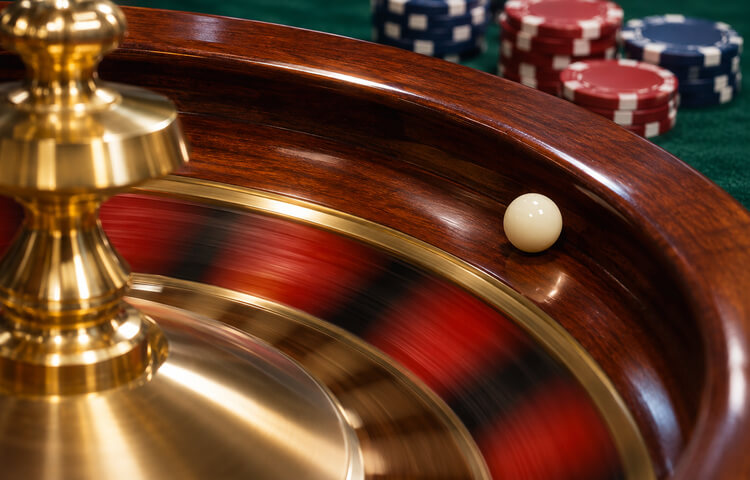
Roulette is rightly called the king of casino and slot games. The distinctive sound of the ball spinning in the opposite direction to the wheel, the visual luxury of the red and black pockets and the suspense as the ball slows down have drawn millions of players around the world for decades.
While beginners usually rely on simple bets such as red or black, sector bets let you cover predetermined sections of the roulette wheel.
Among these sectors, one stands out for its mathematical elegance and its popularity in this region. It is the Tiers du Cylindre, known locally as mala serija. Tiers is not a bet on randomly chosen numbers, but a predefined way of covering a specific sector of the roulette wheel.

What is Tiers du Cylindre?
To fully understand how Tiers works, forget about the classic number layout and focus solely on the roulette wheel itself. On European and French roulette, which have only one zero, the numbers are not arranged in numerical order but follow a fixed sequence that separates high and low numbers, as well as red and black ones.
For sector bets, the numbers on the European roulette wheel are grouped into three main sectors:
- Voisins du Zéro (Neighbours of Zero) – covers zero and the numbers around it.
- Orphelins (Orphans) – covers numbers spread across two separate parts of the wheel.
- Tiers du Cylindre (Thirds of the Wheel) – covers roughly a third of the wheel opposite zero.
Tiers covers 12 numbers located on the opposite side of the wheel from zero.
Tiers numbers and chip placement
Covering all 12 Tiers numbers takes six chips. The bet is placed as six split bets, with each chip covering two adjacent numbers on the standard roulette layout.
The Tiers numbers are: 5, 8, 10, 11, 13, 16, 23, 24, 27, 30, 33 and 36.
Your 6 chips are placed on the following positions:
- Chip 1: split 5/8, covering numbers 5 and 8
- Chip 2: split 10/11, covering numbers 10 and 11
- Chip 3: split 13/16, covering numbers 13 and 16
- Chip 4: split 23/24, covering numbers 23 and 24
- Chip 5: split 27/30, covering numbers 27 and 30
- Chip 6: split 33/36, covering numbers 33 and 36
Each chip covers two numbers. If the ball lands on any of the 12 covered numbers, one of the six split bets wins.

The maths behind Tiers: hit probability and payout
Probability makes it possible to calculate the exact chance of a hit and the possible payout for Tiers. European roulette has 37 pockets in total (numbers 1 to 36 plus zero). Since Tiers covers 12 numbers, the probability that the ball will land in your sector on any spin is exactly:
12 ÷ 37 × 100 ≈ 32.43%
This means Tiers covers approximately 32.43% of the possible outcomes of each individual spin.
How is net profit calculated?
In roulette, a winning split bet pays 17:1.
If the ball lands on one of the covered numbers, the winning split bet pays 17 units of profit, and the chip you placed is returned. In total, 18 units come back. As six units were staked on Tiers, the net profit is 12 units.
Why do players choose Tiers?
Compared with a single-number bet, which has a hit probability of about 2.70% on European roulette, Tiers covers more pockets but delivers a lower net profit relative to the total stake.
Tiers covers a connected sector of the wheel, but previous spins, the way the ball is launched and the position of previous results do not make it possible to reliably predict the next outcome.
A standard Tiers bet takes six chips, while a standard Voisins du Zéro bet requires nine chips and covers more pockets, including zero. The fixed layout of six chips makes it easier to work out your total stake before each spin.
Online roulette and the Racetrack view
In land-based casinos, a player can call out a Tiers bet and hand six chips to the croupier, who then places them on the right positions. Today, in the digital age, the process is much simpler.
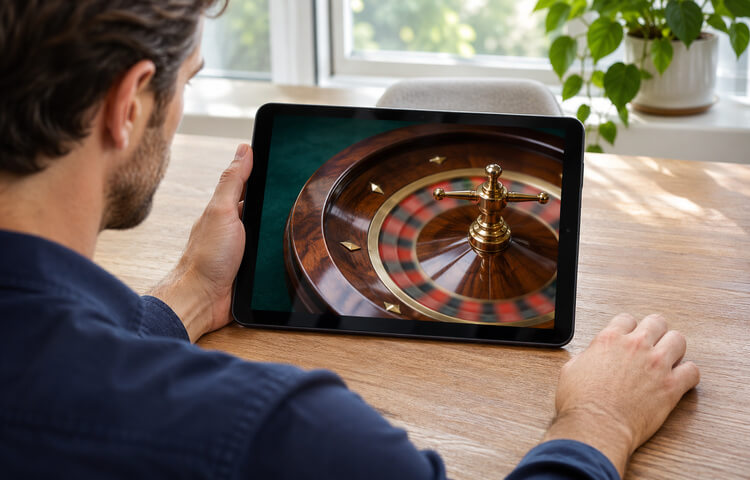
Many online versions of roulette offer a view known as the Racetrack. This is an oval representation of the wheel displayed next to the main table. By selecting the section labelled “Tiers” or “Mala serija”, the software automatically places six chips on the corresponding split bets.
This view can make placing the bet easier in several ways:
- Game speed: There is no risk of missing the betting window while you search manually for the 5/8 or 27/30 combinations.
- Overview: Some versions of the game show previous results and sector statistics, but this data cannot predict the outcome of the next spin.
- Fewer mistakes: Automatic placement reduces the chance of a player putting chips on the wrong split positions.
What should you remember about Tiers?
Whatever type of bet you choose, it is important to understand how roulette is played and to keep in mind that every spin is an independent event.
The fact that the ball has not landed in the Tiers sector for five consecutive spins does not mean that the probability of a hit on the sixth spin is higher than approximately 32.43%.
Before you start playing, set a budget and a loss limit you will not exceed. Tiers covers 12 of the 37 pockets, but it does not reduce the house edge. On standard European roulette, it is approximately 2.70%, as with other standard bets with proportional payouts.
Tiers can be a simple way to cover a connected sector of the wheel with a single bet, provided you always manage your budget responsibly.

A born enthusiast. Looking forward to a new day and new opportunities to learn. Enjoying in conversations with other people and understanding their emotions, always ready to be a good listener. Able to display a whole lott of positive emotions and pass it to other people. Not having problems with talking in front of the group and keeping their attention. Careful with keeping promises and looking at life with internal locus of control.