
Roland Garros 2026 | Who are the favorites and what awaits us in Paris
There are tournaments, and then there is Roland Garros. While other Grand Slam tournaments compete for the title of the most prestigious event in the world of tennis, the Paris clay carries a special aura – a combination of tradition, beauty, and a relentless physical and mental challenge unmatched on any other surface.
The end of May and the beginning of June bring that recognizable red dust to the Roland Garros stadium, the buzz of the stands, and matches that stay etched in memory for years. Many who enjoy sports betting eagerly await this tournament just the same.
As the tournament begins on May 24, it is time to consider who might lift the Musketeers' Trophy and who could secure a place in the history of one of the oldest and most important tennis spectacles on the planet.
A brief history of one of the world’s greatest tournaments
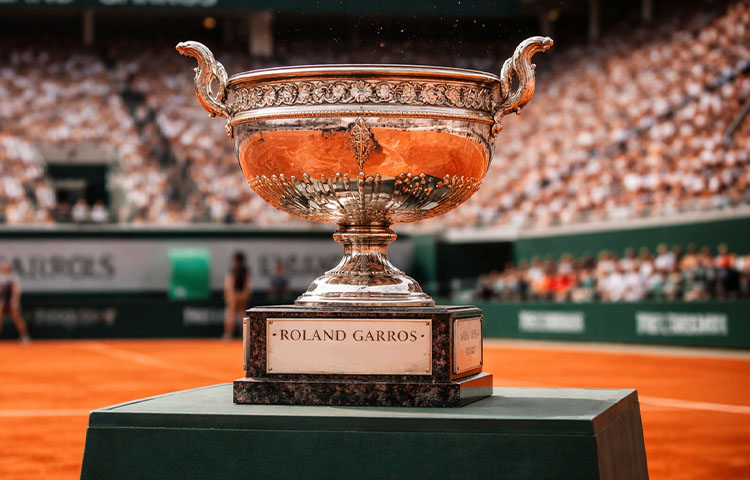
Roland Garros was named after a pioneer of French aviation and a hero of the First World War. However, the tennis history of this venue began back in 1891, when the first French Championships were held. Initially, it was restricted to players from France and French Union countries, and only in 1968 was it opened to professionals, marking the beginning of the Open Era.
Since then, Roland Garros has become known as the “holy ground” of clay – a surface that slows down the ball and demands a completely different type of player than those who dominate on the grass of Wimbledon or the hard courts of the US Open and Australian Open. On clay, the winner must not only be physically prepared, but must also possess patience, the ability to construct points that can last for twenty or more shots, and the mental toughness to handle the most demanding scoring battles in tennis.
Rafael Nadal is unquestionably the greatest name in the history of this tournament. The Spaniard holds the all-time record with an incredible 14 titles, earning him the title “King of Clay.” Alongside him, Novak Djokovic has won Roland Garros three times, while Roger Federer has lifted the trophy once.
In the women’s competition, Chris Evert leads with seven titles, Martina Navratilova has two from earlier years, while Iga Świątek has become synonymous with winning on the Paris clay in recent seasons.
Who are the favorites at this year’s Roland Garros?
The tennis world enters this Roland Garros with a clear hierarchy, but also with several intriguing questions that will only be answered once the balls start bouncing on the clay.
Carlos Alcaraz: defending champion and the most talented player of his generation
The Spaniard, who has clay-court DNA in his veins, won Roland Garros in 2024 and proved he is the true successor to Nadal’s throne on this surface. At just 22 years old, Alcaraz possesses physical strength, speed, and technical ability rarely seen combined in one player since Federer. His expressive style of play, ability to raise his level when it matters most, and natural affinity for clay make him the central figure of this year’s Roland Garros story.
If Alcaraz, currently world No. 1, arrives in Paris in good health and in the form he has shown during the spring clay tournaments, it is hard to imagine anyone standing in his way.
Jannik Sinner: world No. 2 chasing history
The Italian, currently ranked No. 2 in the world, arrives at Roland Garros as one of the top favorites. Sinner has proven over the past season that he is a complete player, capable of dominating on any surface. While clay has not traditionally been his strongest compared to hard courts, his development and confidence as a top-ranked player make him extremely dangerous.
Sinner is missing only Roland Garros to complete a full set of all four Grand Slam titles, and that hunger for a historic achievement will be an extra source of motivation in Paris.
Novak Djokovic: the eternal champion who is not done yet
The Serbian star had a turbulent season last year, but Djokovic should never be counted out. With three Roland Garros titles and unmatched experience, he always becomes a different version of himself in Paris. If he enters the tournament in good form and without physical issues, he will have a say in the final outcome.
Djokovic is one of those players whose mere presence changes the dynamics of the draw and the mindset of his opponents. And that is no small factor.
Casper Ruud and Alexander Zverev: outsiders with real chances
Norwegian Casper Ruud has already been a Roland Garros finalist and has proven he feels at home on Paris clay. Zverev, the German playing some of the best tennis of his career, must not be overlooked either. Both players have the ability to go deep into the draw and challenge the top favorites.
Iga Świątek: the undisputed queen of clay
In the women’s competition, the story is much clearer. Poland’s Iga Świątek has won Roland Garros four times in the last six years and plays a brand of clay-court tennis that feels like a mix of science and art. Her powerful topspin backhand, physical endurance, and mental stability make her the absolute favorite.
The only player who could cause an upset is Aryna Sabalenka, the current world No. 1, who continues to improve her clay-court game. Alongside her, Americans Coco Gauff and Madison Keys are always dangerous on this surface.
Why follow and analyze Roland Garros?
Beyond pure enjoyment of top-level tennis, Roland Garros offers excellent opportunities for those who approach sports analytically. Clay is a surface that reduces the gap between players, extends rallies, and rewards patience and tactics more than raw serving power, which can be very useful for live betting on matches from Paris. This means favorites can be surprised, and a well-analyzed outsider can go much further than rankings might suggest.
In addition to analyzing potential winners, it is worth tracking historical trends: who arrives in Paris in the best form from the clay tournaments in Monte Carlo, Madrid, and Rome? Which players are known for strong performances in long tournaments and are capable of playing seven high-quality matches?
Paris clay is ready
Roland Garros 2026 promises another fantastic chapter in the history of this tournament. The battle between Sinner and Alcaraz for dominance in tennis continues on the sport’s most iconic stage, while Djokovic waits for his opportunity to write yet another remarkable chapter of his career.
In the women’s draw, Świątek defines the era, but every tournament brings a new chance for surprises.
Whether you are a passionate tennis fan, a casual viewer, or someone who follows sports from an analytical perspective, Roland Garros always gives you reasons to stay glued to the screen. History, passion, and clay are a combination that never disappoints.

A born enthusiast. Looking forward to a new day and new opportunities to learn. Enjoying in conversations with other people and understanding their emotions, always ready to be a good listener. Able to display a whole lot of positive emotions and pass it to other people. Not having problems with talking in front of the group and keeping their attention. Careful with keeping promises and looking at life with internal locus of control.